
Why Knee Pain Gets Worse When Climbing Stairs
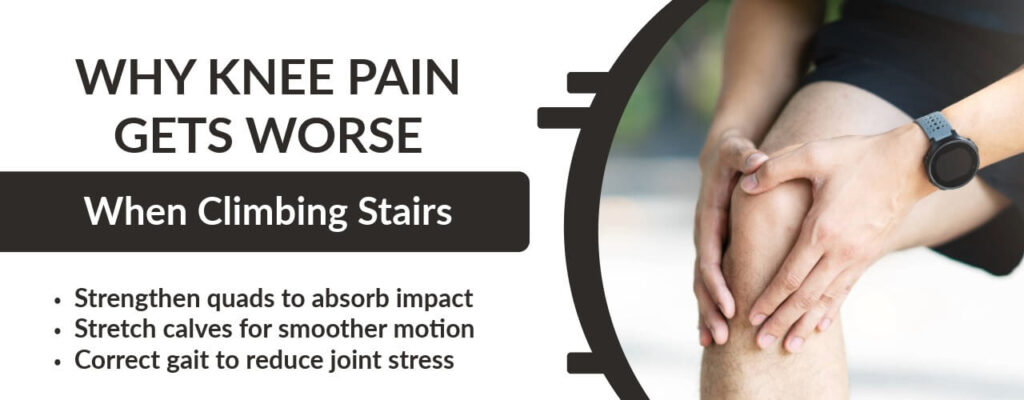
Many people first notice their knee pain when climbing stairs, long before it becomes a problem in other areas of life. But why does this activity, something so routine, cause such discomfort? Understanding the link between knee mechanics and stair climbing can shed light on this frustrating issue—and help you find lasting relief with a bit of help from the [site-name] team.
The Knee Joint: A Delicate Balance of Structures
Your knee that helps you walk, run, sit, stand, and just generally move around. Here’s everything that’s involved:
- Three separate bones (thigh, shin, and kneecap) that come together to form a hinge joint
- Cartilage that cushions and protects the ends of bones
- Four ligaments that stabilize the joint and link the bones together
- Quadriceps and hamstring muscles that move and support the knee
- Tendons that connect muscles to bones
Your knees take a lot of stress during the day, making them prone to injury and inflammation. But how does climbing stairs come into play?
Understanding Why Stairs Trigger Knee Pain
The simple act of stair climbing increases the stress on your knee joint, sometimes by up to four times your body weight. Unlike walking on flat ground, climbing stairs demands more from the muscles, tendons, and cartilage in and around the knee.
When you lift your body upward, your knee joint bends more deeply than it does during level walking. This increased flexion shifts more load to the area where your kneecap meets your thigh bone. If any part of the joint isn’t functioning optimally, you’re more likely to experience knee pain when climbing stairs.
Why Biomechanics Matters
Furthermore, small movement errors can have a big impact on your knees, especially when climbing stairs. You might think about it, but stair climbing requires proper form and muscle coordination. When those factors are off, they can worsen your pain in a couple of different ways:
- Weak hip or thigh muscles force the knee to absorb more impact
- Overpronation (collapsed foot arch) can affect knee alignment
- Leaning too far forward shifts pressure to the front of the knee
Underlying Conditions
Several common conditions can lead to increased discomfort when taking the stairs. If you’re feeling knee pain when climbing stairs, it’s important to get an evaluation to see if you’ve developed any of these issues:
Patellofemoral Pain Syndrome (PFPS)
- Often caused by muscle imbalances or poor alignment, PFPS leads to pain around the kneecap, especially during activities like climbing stairs.
Osteoarthritis
- Cartilage degeneration reduces shock absorption, making the increased joint load during stair climbing more painful.
Tendinitis
- Inflammation of the patellar or quadriceps tendon can make each step feel sharp and uncomfortable.
Meniscus Injuries
- Damage to the cartilage that cushions your knee can cause catching or locking sensations during movement.
How Physical Therapy Can Help You Conquer Stairs
There is some good news if you’re experiencing pain when climbing stairs, however, physical therapy can help! It’s actually one of the most effective ways to manage and reduce knee pain. Here’s how it helps:
- Reduces inflammation and acute pain through targeted modalities like ultrasound or manual therapy
- Improves joint mobility to reduce stiffness
- Strengthens key muscle groups (quads, glutes, hamstrings) to support proper movement
- Teaches proper stair-climbing mechanics to minimize pain triggers
Take the First Step Toward Knee Pain Relief
Don’t let knee pain keep you from climbing stairs (or doing anything else you want to do). At [site-name], we specialize in personalized physical therapy plans that target the root cause of your discomfort. If you’re struggling with knee pain when climbing stairs, let our team help you move better and feel stronger.
Schedule an appointment at our Michigan clinic to get started.